How to Shoot Employee Stories in India That Do Not Look Staged
Most employee films feel like hostage videos. Here is why that happens in Indian offices, and what I do differently.

Most employee films feel like hostage videos. Here is why that happens in Indian offices, and what I do differently.
The films that made me want to write this
I have watched a lot of employee films. Not by choice, exactly. When you work in this space you end up studying what other people have made, and after a few years a pattern becomes hard to ignore.
Most of them feel like hostage videos.
The person on screen is saying good things about their employer. The words are fine. The lighting is often fine. And yet something in you does not believe a single second of it. Their shoulders are too high. They are looking slightly off camera at someone they are afraid of disappointing. They finish a sentence and their eyes flick sideways to check whether that was the right answer.
You cannot fix that in the grade. You cannot fix it with a better camera. It is not a technical problem at all.
I want to write down what I have learned about this, because employee stories are a large part of what I do, and because the difference between a film people believe and a film people scroll past is almost never in the equipment.
Why it happens, and why it happens more in an Indian office
Here is the thing that makes employee films different from every other kind of interview. The person in the chair is being recorded, by their employer, saying things about their employer, while their employer watches.
That is a strange situation for anyone. In an Indian office it is often stranger, and I say that as someone who has grown up and worked here.
Hierarchy is real in most Indian workplaces, and it is felt more than it is stated. If a senior person is standing at the back of the room, the person being interviewed knows exactly where they are, even without looking. They will answer to that person. Every sentence will be shaped, very slightly, by what will be safe to have said.
There is also a habit, and I recognise it in myself, of wanting to give the correct answer. Many of us were educated in systems where there was a correct answer, and where volunteering something personal was not rewarded. So you ask someone what they love about their work and they give you a sentence that sounds like it came off a careers page, because that is the answer they believe is being requested.
None of this is a character flaw. It is a completely reasonable response to being filmed at work. The job is to build a situation where a person does not need that armour, and then to wait.
The manager should leave the room
This is the single most useful thing I have learned, and it is also the hardest conversation to have, because the person you need to remove is often the person who hired you.
I now raise it before the shoot day rather than on it. I explain that we will get better material if the room is small, and that anyone senior to the interviewee will change what the interviewee says whether or not they intend to. Most people understand this immediately when it is put to them plainly. Some do not, and then it becomes a judgement call about how hard to push.
When I cannot get the room cleared, I do the next best thing. I put the senior person behind the camera and out of the eyeline, I keep the crew to the smallest number I can work with, and I spend longer on the warm up.
A small room is not a technical preference. Every extra person is another face the interviewee is performing for.
The first answer is not the answer
Ask someone a question and the first thing they say is usually something they have said before. It is prepared, it is smooth, and it is nearly useless.
So I ask again. Not the same question, and not in a way that suggests they failed the first time, because that will make them tighten up further. I ask about the same thing from a different door. If the prepared answer was about collaboration, I will ask them to tell me about a specific week when the team had a problem. If they say the culture is supportive, I will ask who supported them, by name, and what that person actually did.
The specific question defeats the rehearsed answer, because you cannot recite a generality when someone has asked you for a Tuesday.
Almost always the second or third pass is where the real thing lives. It comes out less tidy. There are false starts and the grammar goes sideways. That is the material you want. Tidiness and truth are not the same thing, and audiences can tell the difference even when they cannot articulate it.
Learn to shut up
I was bad at this for years, and I still have to consciously stop myself.
When someone finishes an answer, there is a silence. The instinct is to fill it, because silence in a conversation feels like a failure of hosting. So you jump in with the next question and you move on.
Do not. Wait. Count if you have to.
A surprising number of times, the person will start talking again on their own, and what comes second is quieter and more honest than what came first. They have already given you the answer they prepared. In the silence they start giving you the one they actually meant. Some of the best lines I have ever recorded arrived three or four seconds after I thought the answer was over.
The corollary is that you have to stop nodding and saying "mm" while they talk, because it lands on the audio and it makes clean editing miserable. React with your face. Keep your mouth shut.
You cannot do eight of these in a day
You can. I have. It was not good work.
A schedule that packs eight interviews into a day is a schedule built by someone counting deliverables rather than watching what happens in the room. By the fourth one you are tired and you stop listening properly, which is the entire job. By the sixth you are asking questions off the sheet instead of following what the person just said.
The interviewee needs time too. There is a period at the start where they are aware of the lens, and it does not shorten because you are in a hurry. It usually takes fifteen or twenty minutes before someone stops performing, and if the whole slot is thirty minutes then you have spent most of it filming a person pretending to be relaxed.
When I am asked to do more interviews than the day can hold, I say so, and I offer the honest options. Fewer people properly, or more people shallowly. Clients almost always choose properly when the trade off is named out loud. They just need someone to name it, and that is part of what they are paying for.
The room matters more than the camera
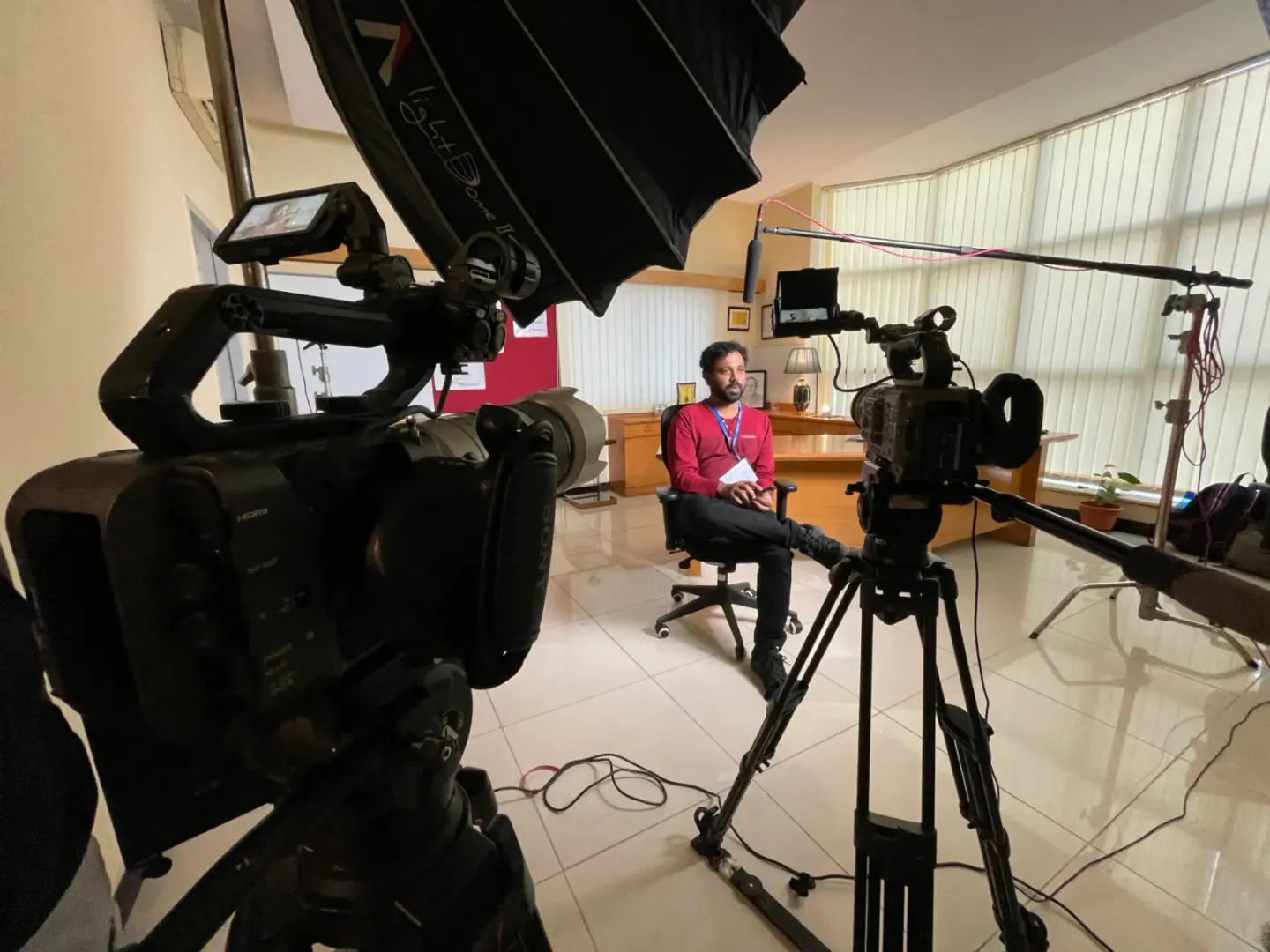
I look for a corner of the real office rather than a conference room, and I look for a window.
Conference rooms feel like appraisals. People have been given bad news in them. Put someone in the same chair where they had their last performance review and some part of their body remembers it.
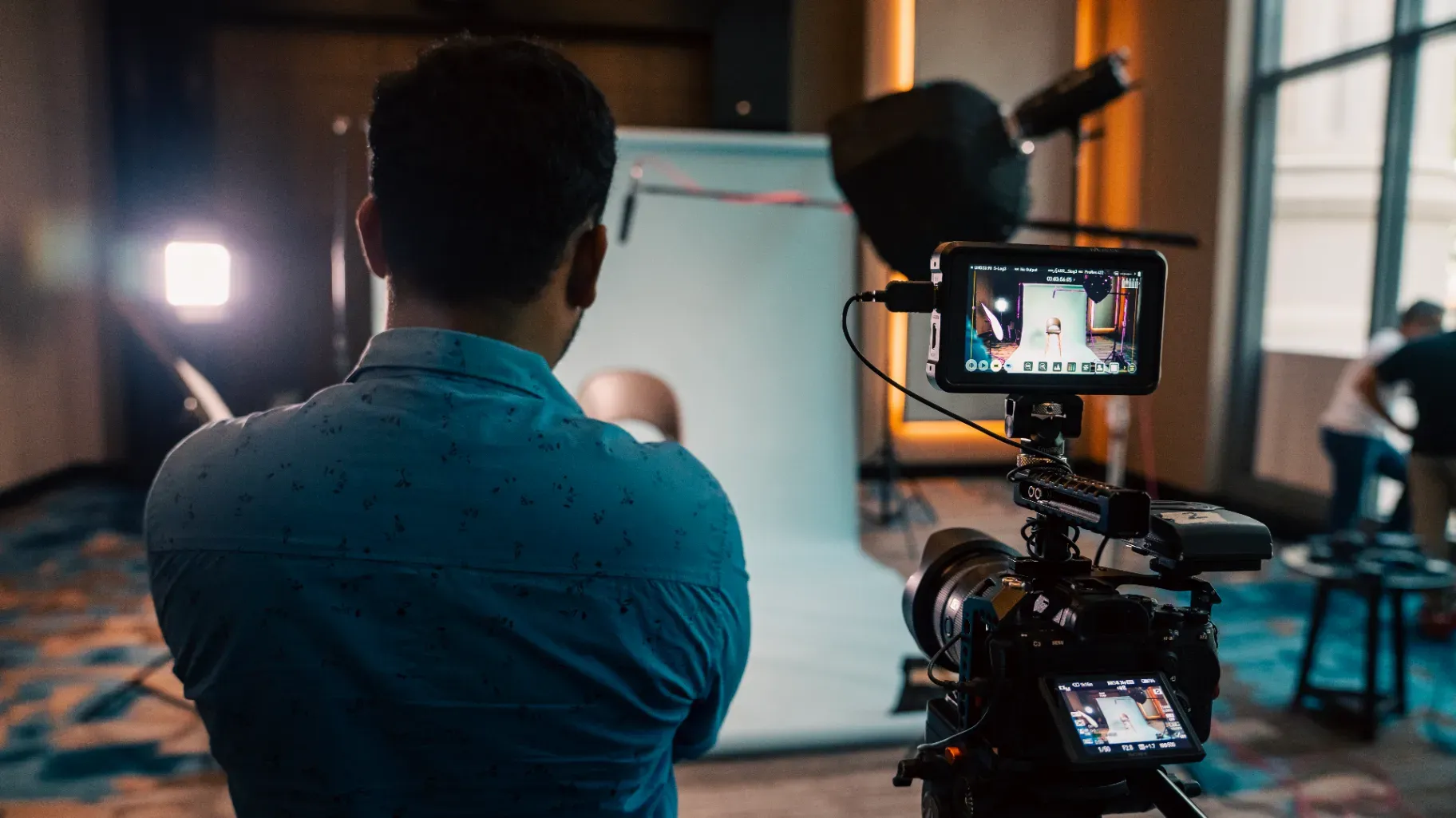
Natural light does something for a face that a light panel struggles to fake, and more importantly, sitting near a window feels less like being interrogated. If I have to build the light entirely, I still keep the setup small. A single soft source and a bounce reads more like a conversation than a full three point kit with stands crowding somebody's knees.
Real background depth helps too. An actual office behind someone, slightly out of focus, with people moving in it, tells the audience this is a real place. A pull up banner tells them somebody produced a video.
The interview is the easy part
The parts people remember are usually not the interview.
It is someone laughing at their desk. Two people arguing amiably about something on a screen. Hands making chai in the pantry. Somebody walking in at nine in the morning with earphones in.
The mistake is to stage these. You can always tell. A staged laugh is one of the most visible lies in corporate film, and once an audience catches one they stop believing everything else.
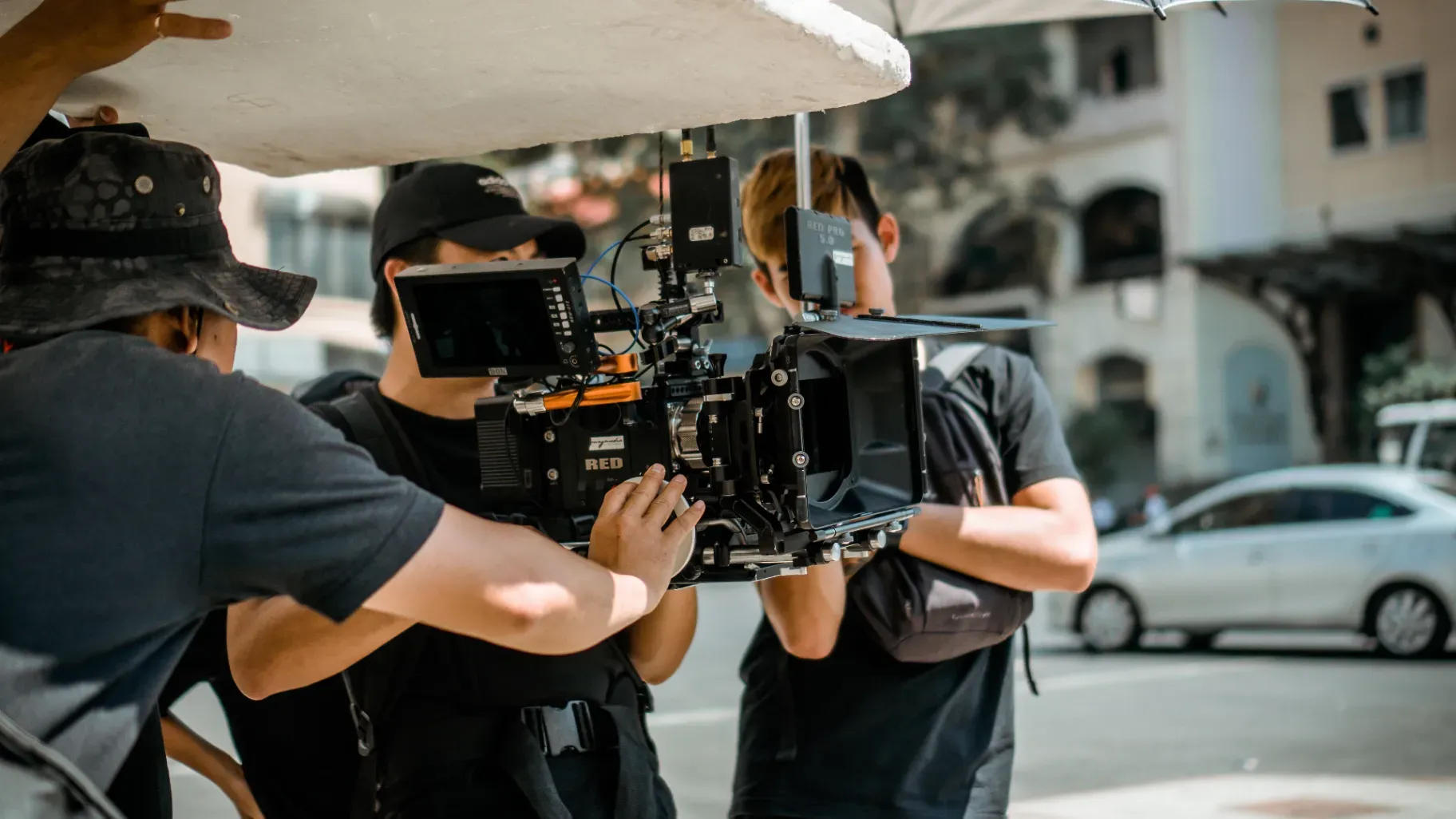
So I shoot the office as it is, and I take a lot of it. That means being around before the interviews start and staying after they finish, which is time nobody budgets for. It also means being a little boring for a while. If I stand in a corner of a room with a camera and do nothing for long enough, people stop watching me and go back to their work, and that is the point at which the real footage starts.
The other thing I have learned is to ask. If somebody is about to do something that would look good on camera, I would rather tell them I am going to film it than surprise them. A person who knows they are being filmed and has agreed to it relaxes far faster than a person who suspects it.
Consent is not a formality
Because this is filmed at work, and because their employer is paying for it, an employee is not in a neutral position when they are asked to sign a release. It is worth being conscious of that.
I explain what the film is for and where it will be used, in plain words rather than by handing over a form. I make it clear that they can say no, and I mean it. And if someone says during an interview that they would rather I did not use something they just said, I do not use it, regardless of how good it was.
That sounds like it costs you material. In practice it does the opposite. Once a person understands that they have a brake, they stop needing it, and they say far more than they would have said otherwise.
What actually makes these films work
None of this is complicated, and none of it is about gear.
Get the room small. Ask questions specific enough that a rehearsed answer will not fit. Wait longer than is comfortable. Give people enough time to forget the lens. Shoot the office honestly rather than performing it. Treat consent as real.
What you are trying to reach is a moment, usually somewhere past the halfway mark, where a person stops giving answers and just tells you something. Their voice changes when it happens. You can hear it on the day.
That moment is the entire film. Everything else is scaffolding around it.
I have made corporate films where we had a beautiful camera package, an efficient schedule and a client who was delighted on the day, and the interviews were dead, because the room was full of people and nobody had time to relax. I have also shot an employee story on a small setup, in a corner near a window, running late, where a woman told me something about why she had come back to work after a difficult year, and every single person who has watched that film remembers her.
The equipment did not do that. Time did, and quiet did, and not filling the silence did.